
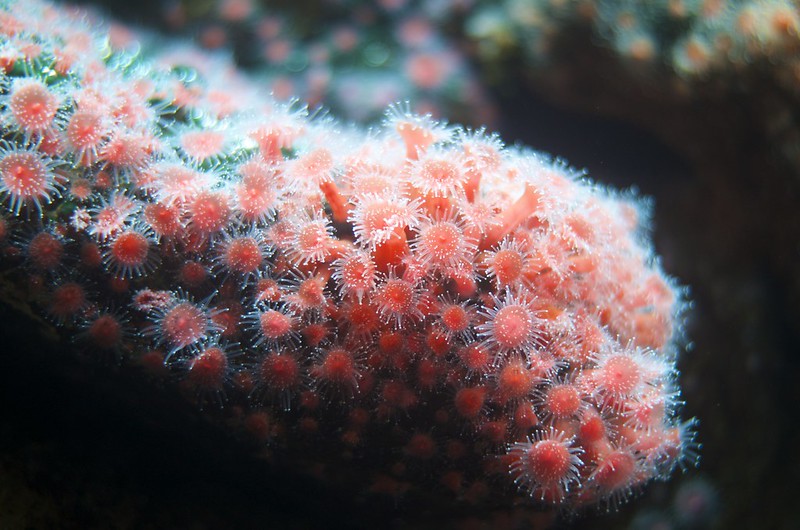
Here in the Northern Hemisphere, the days are getting longer and the weather warmer. For many of us humans, this means that it’s time to lather on sunscreen, go to the beach, and enjoy the sunshine. Sadly, this will not be true for all creatures. The world is heating up, much faster than at any point in the last several million years, and the ecosystem is struggling to cope. Few regions feel this more directly than coral reefs located around the tropics as they begin to bleach.
Why, of all the ways the climate catastrophe is affecting the world, should we pay attention to coral? To understand that, we need to get a better view of what exactly coral is.
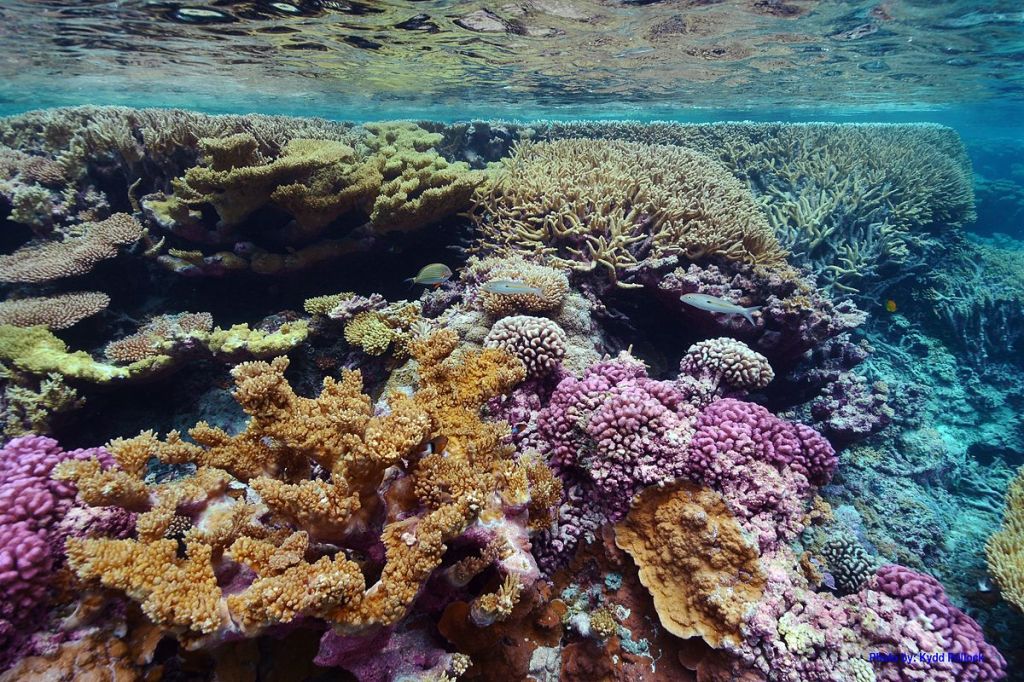
Many people see coral as something like an underwater plant, but coral are actually animals, related to things like jellyfish and sea anemones. Looking at one of these structures, you may ask yourself how could that possibly be related? They look nothing alike. That is because we aren’t looking at just one coral, we are looking at a whole colony of them.
Each individual coral in the colony, known as a polyp, looks almost like a small, upside-down jellyfish as it reaches into the water grabbing for little bits of drifting food.
One of the defining characteristics of a coral reef is its colour. Vibrant purples, blues, greens, and yellows tile the mosaic on the ocean floor. These colours don’t come from the coral polyps themselves, but from a bit of a helper they have. Their zooxanthellae (zoo-zan-THEL-ee).
Oh wow, that is a mouthful. Zooxanthellae are small algae that live inside the coral and help to feed them. These algae are able to do photosynthesis, turning sunlight into food. They share a relationship known as mutualism. The coral allow the algae to live inside them, nice and protected from surrounding dangers, and the algae give the coral extra food. If you’ve ever wondered why all of the coral reefs you’ve seen are in places that get a lot of sunlight, it is because of these zooxanthellae.
There is still a cost to the coral for keeping the algae safe. If the environment ever gets to be too harsh, they will force them away as a kind of last ditch attempt to keep themselves alive. This is what we call “bleaching”.
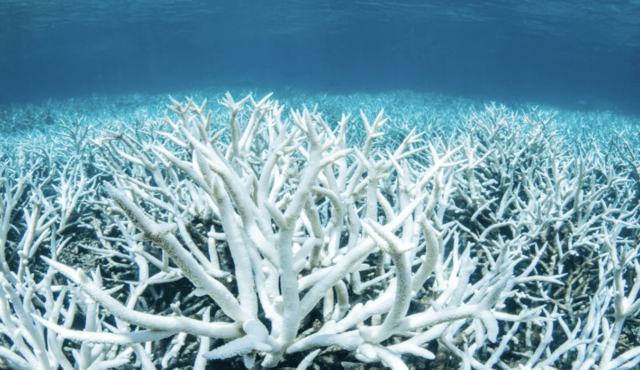
Why is bleaching so bad? Earlier I said that coral are able to eat what’s around them using their tentacles, so surely they’d be able to survive without their zooxanthellae. Unfortunately, the food around them cannot sustain them perfectly, so without their algae they don’t have enough energy to stay alive long term.
A bleached coral reef is a haunting sight. With the global rise in temperatures, summers are now getting hotter. These hotter oceans have led to an increase in coral bleaching as the coral expel their algae to hopefully survive the warmer oceans, to live until the weather cools down.
If the change is too much over too long a period of time, then the coral will die. While bleached coral appears white and ghostly, dead coral is black. Researchers writing in an article in “Regional Studies in Marine Science” in 2025, found that over an 18 year period, between 10-20% of coral on reefs in the Pacific ocean have died due to the effects of global warming.
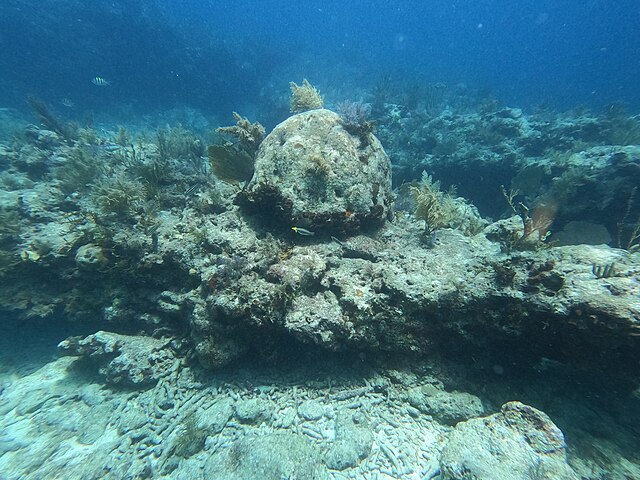
Now, why does this all matter? It is unfortunate that these animals are being lost to climate change, for sure, but do these small jellyfish-like creatures really need so much focus?
Yes.
Coral are ecosystem builders. Where there is a reef, there are animals who want to use the little crevices between the coral to hide. There are animals who want to eat the coral. There are animals who hunt the ones that hide in the corals. Coral reefs are home to some of the richest biodiversity in the world. An estimate from the journal “Current Biology” in 2015 suggests that there are nearly a million different species that call coral reefs home. This density of species craters the moment a reef dies. From one of the busiest places found in the natural world to a barren seafloor, with only the death of this one kind of animal.
Humans use these ecosystems as well. Societies along coastlines use these coral reefs to hunt, as an incredibly rich source of food that can maintain large groups of people. If these reefs die, then the people who use them face major food shortages.
Coral reefs are in the direct line of fire for climate change, and we must do what we can to help preserve them. These tiny animals serve as the backbone to the lives of many, wildlife and humans alike. When enjoying yourself this summer, let others know about the importance of coral so we may work together to keep the reefs healthy.


 Snippets of Science
Leave a comment