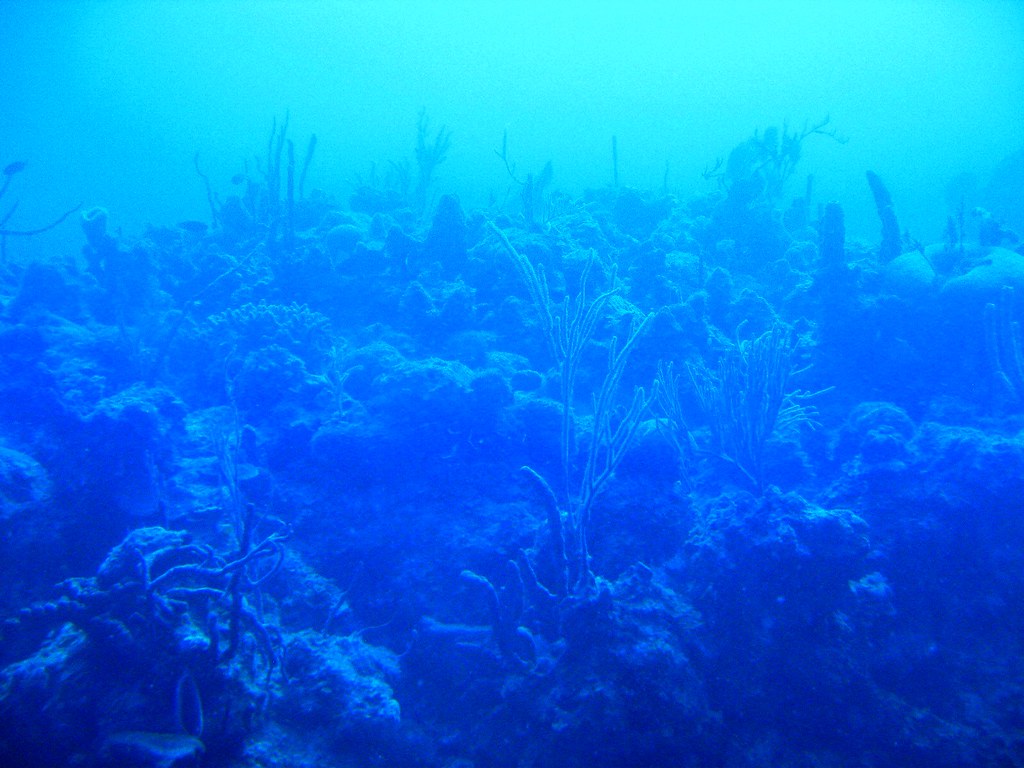
A new article in the journal Earth, Atmospheric, and Planetary Sciences may have rewritten what we thought we knew about how oxygen reached the ocean floor. By using proportions of the element selenium in rock samples, they were able to estimate that the deep ocean permanently had oxygen in it from about 390 million years ago. Earlier research suggested this had happened 540 million years ago, a full 150 million year difference.
The article claims that trees are to thank for the deep sea being livable for animals, though perhaps not in the way one would think. The first forests evolved about 390 million years ago and led to a massive increase in the amount of oxygen in the atmosphere. While this definitely did increase oxygen in the ocean somewhat, it was the introduction of new biological matter into rivers that had a larger effect. When this organic matter was buried in the ocean floor, the oxygen that would have been used was instead left to build up in the environment.

This increase in land plants increased the amount of phosphorus in rivers and therefore the amount flowing into the ocean, letting things like algae grow more readily. Algae, like land plants, perform photosynthesis and convert carbon dioxide into oxygen.
This study also found evidence for deep ocean oxygen during the start of the Cambrian period, the time when previous research had suggested oxygenation happened. This also coincides with the evolution of many new species, famously known as the Cambrian Explosion due to the sudden diversity of animal life.
We don’t yet know what caused this initial burst of oxygen in the deep sea, but whatever it was it was unable to be sustained. Those areas of the ocean lost their oxygen about 530 million years ago. After the loss of this resource, the rate at which new species evolved slowed down dramatically.
Research such as this can give us a clearer understanding of the many ways apparently disparate and distinct parts of the ecosystem all feed into each other, how a disruption in one area could impact many others in apparently unpredictable ways. “This work shows very clearly the link between oxygen and animal life in the ocean,” says Michael Kipp, a researcher for this study, “This was a balance struck about 400 million years ago, and it would be a shame to disrupt it today in a matter of decades.”
Edit: Added a new sentence to the end of paragraph two after conferring with an author of the original study.
 Snippets of Science
Leave a comment